In chemistry class, we learned that the proportion of various gases in the air is about 78% nitrogen, about 21% oxygen, about 0.939% rare gases, about 0.031% carbon dioxide, and about 0.03% other gases and impurities. Do you know that these gas components have been very mature and widely used in clinical medicine? These treatment methods belong to gas medical treatment, and medical gas refers to the gas used in medical treatment. Common medical gases are: oxygen, carbon dioxide, nitrous oxide, argon, helium, nitrogen and compressed air. Some are used directly for treatment; some are used for anesthesia; some are used to drive medical equipment and tools; some are used for medical experiments and bacteria, embryo culture, etc.
1. Oxygen
In medicine, high-purity oxygen is the most basic substance to maintain life. It is used to supplement oxygen for hypoxic patients. Ordinary patients breathe oxygen through humidifier bottles; critically ill patients breathe oxygen through ventilators. Oxygen is also used in hyperbaric chambers to treat diving sickness, gas poisoning, and for drug atomization.
2. Carbon dioxide
In medicine, carbon dioxide is used to inflate the abdominal cavity and colon for laparoscopy and fiber colonoscopy. In addition, it is also used to culture bacteria (anaerobic bacteria) in the laboratory. High-pressure carbon dioxide can also be used for cryotherapy to treat cataracts, vascular diseases, etc.
3. Carbon monoxide
Nitrous oxide can make people laugh after inhalation, and is called laughing gas. A small amount of inhaled laughing gas is harmless to the human body and can act as an anesthetic. In medicine, a mixture of laughing gas and oxygen (mixing ratio: 65% N2O + 35% O2) is used as an anesthetic, which has the advantages of short induction period, good analgesic effect, fast awakening, and no adverse effects on breathing and liver and kidney functions.
4. Argon
Argon can reduce the temperature of the wound surface during surgery and reduce the oxidation and carbonization (smoke, eschar) of damaged tissues. Therefore, it is often used in medical surgical instruments such as high-frequency argon knives.
5. Helium
Helium is used to protect metals from oxidation. It is often used in high-frequency helium knives in medicine. Helium can also achieve a deep cold temperature of -451 degrees Fahrenheit, effectively obtaining high-resolution images of internal organs and tissues, so it is an ideal freezing gas for magnetic resonance and nuclear magnetic resonance superconducting magnets.
6. Nitrogen
In medicine, "cryosurgery" based on liquid nitrogen has been widely used in dermatology, ophthalmology, dentistry, gynecology, ENT, oncology, etc. The diseases treated include skin diseases, hemangiomas, brain tumors, lung cancer, cervical erosion, internal hemorrhoids, warts, moles and dozens of other diseases. At the same time, the success rate in treating hemangiomas is more than 80%, and the efficiency is more than 90%.
7. Compressed air
Compressed air is used to transmit power for oral surgical instruments, orthopedic instruments, and ventilators.
The content of hydrogen in the air is very small, but with the exploration of more and more professional scholars from all over the world, hydrogen has developed rapidly in the medical field. Since the publication of Professor Shigeo Ohta's paper on the effects of hydrogen on ischemic brain damage in the journal Nature Medicine in 2007, medical and biological research based on hydrogen has begun worldwide, and there are now more than 1,500 scientific papers written in English. But over the years, it has not been easy to change common sense, and some people have been skeptical and have not realized that hydrogen has many benefits.
Ⅰ. Safe and without side effects
The traditional view is that effective drugs always have side effects, but hydrogen has no side effects: hydrogen is an endogenous gas, that is, the human body automatically produces hydrogen. Hydrogen itself is an inactive gas and will not participate in the normal material transfer and transformation process in the human body. When hydrogen combines with malignant oxygen-rich free radicals, the generated substance is water, which will not cause harm.
Ⅱ. Multifunctional and multi-purpose.
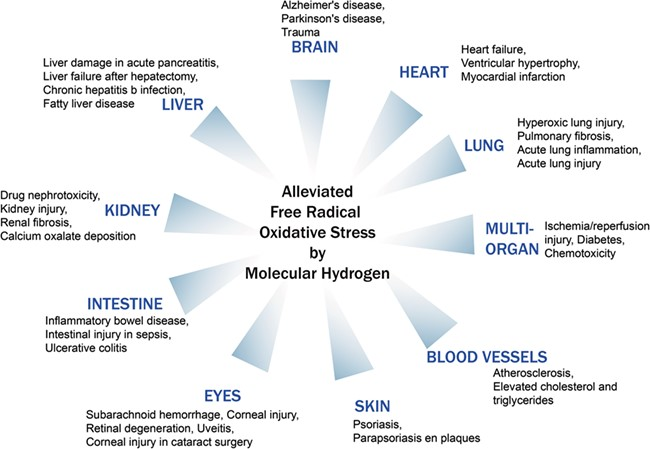
Most drugs have specific effects on specific diseases, but hydrogen has effects on almost all organs. Drugs can solve high blood pressure, but they do not solve the causes of high blood pressure. Drugs can control high blood sugar, but they do not target the causes of high blood sugar. The key is that the causes of many chronic diseases are unclear, or there are too many causes. Academician Zhong Nanshan said that hydrogen is a "cause treatment" (i.e. it has a therapeutic effect on the cause of the disease), so hydrogen treatment should be moved forward. Hydrogen can penetrate into cells and tissues that drugs cannot penetrate, and has miraculous effects on many difficult problems, such as oxidative stress in prostate and tumors.
III. From treatment to health care
The current consensus of medical experts is that drugs are not used for health promotion, and health foods are ineffective in improving serious diseases. On the other hand, hydrogen has a wide range of goals, from treating serious diseases to maintaining health, which is also an area that traditional treatment cannot reach. I often hear some people who are very serious about using hydrogen. When I say serious here, I mean using it every day, for a long time every day, often using it in combination with inhalation and drinking, and the daily inhalation time is also relatively long, and the time of using hydrogen is also relatively long. This kind of serious hydrogen user often shows more miraculous effects. For example, the blood pressure of people with long-term hypertension has returned to normal, and the medication has gradually been reduced or even stopped. Parkinson's disease has gone from being unable to take care of themselves to being able to take care of themselves. The cognitive function of patients with senile dementia has been significantly improved. The memory loss of ordinary middle-aged and elderly people in the past has been significantly improved. The complexion becomes ruddy and younger, and age spots gradually fade. Sleep quality improves significantly, and energy becomes more abundant. In recent years, sub-health status has continued to spread. According to the World Bank's survey data on chronic diseases in China, the number of chronic diseases in people over 40 years old will triple in the next 20 years. Chronic disease death is also the main cause of death among Chinese residents, accounting for 85% of China's total deaths. Data show that the number of elderly people in China in 2020 is about 255 million, and it is expected to double in 2025. The more elderly people there are, the higher the demand, attention and urgency for health.
In recent years, the country has issued a large number of policies related to the big health industry. The "Healthy China 2030" Planning Outline, "China's Medium- and Long-Term Plan for the Prevention and Treatment of Chronic Diseases", "Opinions on Promoting the Development of "Internet + Medical Health", etc., demonstrate the country's attention to the big health industry. In particular, the release of the "Healthy China 2030" Planning Outline shows that "Healthy China" has officially risen to a national strategy and has become a new engine for China's economy after the Internet.
It may be more valuable to introduce hydrogen as a "non-drug therapy" into the field of health. It adjusts the functional state of each tissue cell in the body, which is reflected in the changes of certain test indicators of the whole body, such as the reduction of blood lipids, the reduction of fatty liver, the improvement of sleep and intestinal problems, etc. Inhaling hydrogen, drinking hydrogen water, taking a hydrogen water bath, injecting hydrogen saline, etc., we have more and more ways to get the benefits of hydrogen to the human body and significantly improve our health. If you are a person who pursues a healthy life, why not try it?