Inhaling hydrogen can make your blood vessels return to youth and keep you away from cardiovascular and cerebrovascular diseases
Research shows that blood vessels are the channels for the body to transport blood, which can be divided into arteries, veins and capillaries. Arteries carry blood from the heart to body tissues, veins carry blood back to the heart from tissues, and microvessels connect arteries and veins, which are the main places for the exchange of substances between blood and tissues.

Vascular sclerosis refers to a series of pathological changes caused by diffuse atherosclerosis, stenosis of the lumen and occlusion of small blood vessels, which leads to reduced blood supply to the brain.
The most common cardiovascular disease in humans is arterial vascular sclerosis. Hypertension, diabetes, hyperlipidemia, etc. However, obesity, smoking, heavy drinking, endocrine disorders, stress, mental stimulation, bad diet and lifestyle, lack of exercise and age are all risk factors for arteriosclerosis.
All these risk factors that lead to cardiovascular disease can damage the vascular structure through various channels.
In addition to classic risk factors such as aging, diabetes, and smoking vascular sclerosis, obesity and rheumatoid arthritis can also cause vascular sclerosis.
Reactive oxygen is also an inevitable byproduct of the electron transfer process in aerobic metabolism. Atherosclerosis is a concomitant disease of rheumatoid arthritis, and cardiovascular disease is also an important cause of death in such patients. Inflammatory response is a common manifestation of rheumatoid arthritis and arteriosclerosis, and oxidative free radical damage and inflammatory factors are common damaging factors of these diseases. These inflammatory pathways affect the structure of vascular endothelial cells and also affect the synovial tissue of joints.
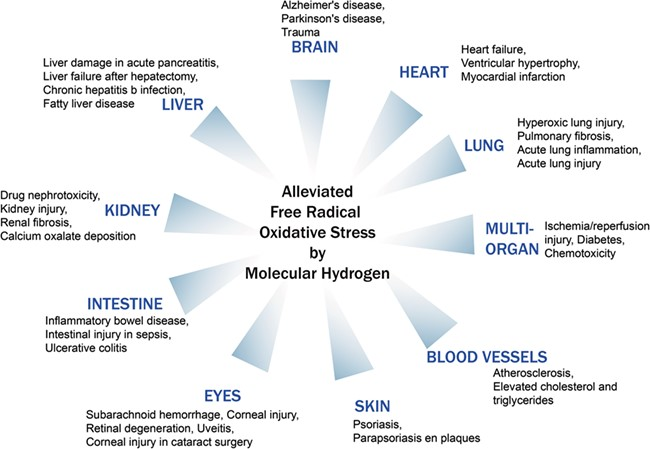
The role of hydrogen is very extensive. After 2007, scientists have explored a large number of disease models and human clinical diseases. Ichihara et al. conducted a systematic analysis of 321 original papers in 2015 and found that most of these papers came from scholars in China, Japan and the United States. About 3/4 of the papers are disease model studies using mice and rats. The methods used include hydrogen water and hydrogen, as well as hydrogen saline. Many early studies reported that hydrogen can neutralize hydroxyl radicals and nitrite anions, but the free radical scavenging effect cannot fully explain the significant effect of hydrogen. The effects of hydrogen also include activating various bioactive molecules, such as Lyn, ERK, p38, JNK, ASK1, Akt, GTP-Rac1, iNOS, Nox1, NF-κB p65, IκBα, STAT3, NFATc1, c-Fos and ghrelin. However, it is still unclear who is the original initiator molecule for hydrogen to exert its effect, or which target molecule hydrogen exerts its effect through, which is also an important part of hydrogen biomedical research.
Hydrogen, as an antioxidant in the body, can remove free radicals in the blood, reduce the erosion and damage of free radicals to the blood vessel wall, and effectively prevent atherosclerosis
In general, hydrogen can prevent oxidative damage to vascular endothelial cells by removing malignant free radicals and improving the antioxidant and repair ability of cells, thereby playing an intervention role in arterial plaques. You can regulate your body through various intake methods such as drinking hydrogen water and inhaling hydrogen. Long-term hydrogen inhalation will give you unexpected surprises! Let your blood vessels return to a young state and stay away from cardiovascular and cerebrovascular diseases!